
Ethereum: The Unsung Hero of Cryptocurrency – The Truth Behind Mining Revealed
In our previous discussion, I tried to educate my brother about the world of cryptocurrency, specifically Bitcoin and its underlying mechanics. However, one topic he struggled with was mining, a process that is often overshadowed by the flashy headlines of new coins like Ethereum. But today, we’re going to dive into the fascinating world of Ethereum mining and find out what makes it so significant.
What is Mining?
For those who may not be familiar,
Mining in the context of cryptocurrencies refers to the process of validating transactions on a blockchain network and adding them to the public ledger, called the chain. It’s like a digital puzzle where miners compete to solve a complex mathematical problem that helps secure the network and validate transactions.
How does mining work?
With Bitcoin, mining is done using powerful computers that solve complex mathematical equations to validate transactions. The process involves several steps:
- Transaction validation: Miners collect and verify transactions on the blockchain.
- Transaction grouping: Miners group verified transactions together into a batch called a block.
- Mathematical proof: Miners use special software to create a mathematical proof that proves that the transactions are legitimate and add up correctly.
- Blockchain update: The miner broadcasts the block of transactions to the network, updating the blockchain.
The mining process on Ethereum
Now let’s move on to Ethereum, often referred to as the “world’s second largest cryptocurrency” after Bitcoin. On the Ethereum blockchain, mining involves a different process:
- Transaction validation: Miners collect and verify transactions on the Ethereum network.
- Transaction grouping: Miners group verified transactions into a batch called a block.
- Gas-based proof: Miners use gas (a unit of measurement for computational effort) to create a mathematical proof that proves that the transactions are legitimate and add up correctly.
- Blockchain update: The miner broadcasts the block of transactions to the network, updating the blockchain.
The importance of mining on Ethereum
Ethereum’s mining process sets it apart from other cryptocurrencies like Bitcoin. And here’s why:
- Scalability: Ethereum’s Proof-of-Stake (PoS) consensus algorithm allows for more scalability than Bitcoin’s Proof-of-Work (PoW).
- Security: Ethereum’s use of gas-based proofs ensures that transactions are secure and transparent.
- Smart contract functionality: Ethereum’s blockchain hosts millions of smart contracts that can automate complex processes and perform actions without human intervention.
The consequences of overmining
Although mining is an integral part of the Ethereum network, excessive mining can have negative consequences:
- Energy consumption: Mining requires significant amounts of electricity, which contributes to greenhouse gas emissions.
- Blockspace
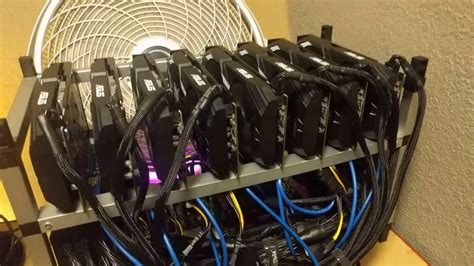
: As more transactions are added to the blockchain, more space is required for each block, resulting in longer transaction times and higher fees.
Conclusion
Ethereum’s mining process is an important part of its ecosystem and enables the creation and validation of smart contracts on the blockchain. While it may not be as flashy as some other cryptocurrencies, Ethereum’s mining mechanism has significant implications for scalability, security, and decentralization. As we continue to explore the world of cryptocurrencies, understanding the intricacies of mining becomes increasingly important.